
Magnesium Glycinate vs. Magnesium Oxide: Which Is Better for Menopause Anxiety & Sleep?
Subscribe to my email list
Get simple, research-backed tips for better sleep, balanced energy, and relief from menopause symptoms—delivered straight to your inbox.
Magnesium glycinate and magnesium oxide are different forms of magnesium affecting absorption and tolerability.
Magnesium oxide provides a relatively high amount of elemental magnesium but is less bioavailable than several other magnesium forms.
Magnesium glycinate is generally well tolerated and is a popular choice for nighttime use and relaxation.
For menopause anxiety and insomnia, glycinate is a better option to consider.
Magnesium oxide is useful if constipation is also an issue, because it has a laxative effect.
When comparing products, look at the elemental magnesium listed in the Supplement Facts panel rather than simply the large number on the front of the bottle.
More magnesium isn't necessarily better. Your individual needs, medications, health conditions, and diet all matter.
If you're taking magnesium for menopause symptoms, you've noticed that there isn't just one kind.
There's magnesium glycinate, magnesium oxide, citrate, threonate, malate, and chloride. Suddenly choosing a magnesium supplement is confusing.
Two of the most common forms are magnesium glycinate and magnesium oxide.
But are they different?
And if you're a woman in midlife dealing with anxiety, restless nights, or difficulty sleeping, which one makes more sense?
The short answer is: it depends on what you're looking for.
Magnesium glycinate is more commonly considered for a nighttime routine because it is well tolerated and has become popular for relaxation and sleep support.
Magnesium oxide, on the other hand, is inexpensive, provides a relatively high amount of elemental magnesium, and is commonly used for its laxative effect.
Why Are There Different Types of Magnesium?
Magnesium is an essential mineral involved in hundreds of biochemical reactions in the body.
It contributes to normal muscle and nerve function, energy production, blood glucose regulation, and other important processes. The body obtains magnesium from foods such as leafy greens, nuts, seeds, legumes, and whole grains, as well as from supplements.
But supplemental magnesium isn't simply "magnesium."
It's attached to another compound.
That's why you see names such as:
Magnesium glycinate
Magnesium oxide
Magnesium citrate
Magnesium threonate
Magnesium malate
Magnesium chloride
The compound attached to magnesium affects things such as solubility, absorption, elemental magnesium content, and gastrointestinal effects.
Magnesium Oxide: What Is It?
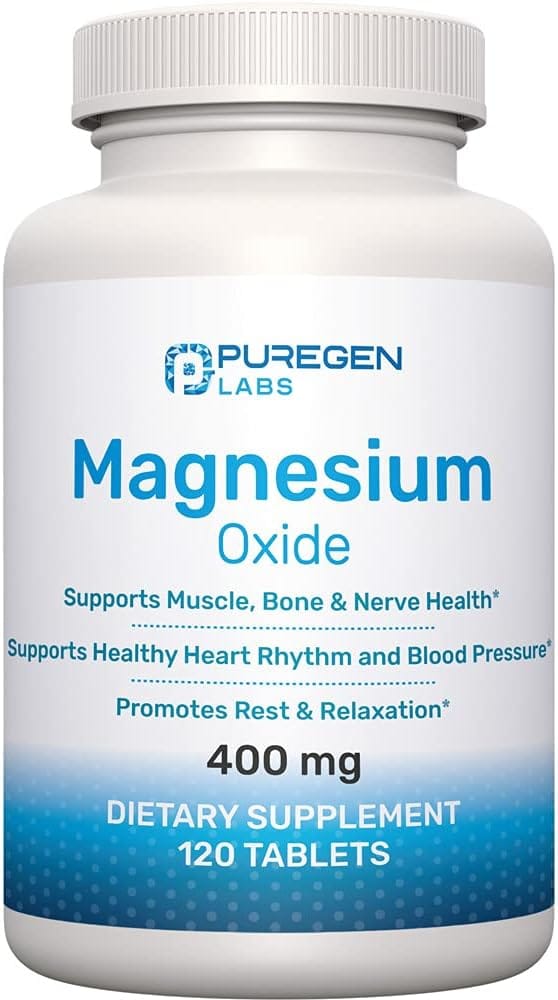
Magnesium oxide is magnesium combined with oxygen.
It is one of the most common and inexpensive forms of supplemental magnesium.
One reason you may see very high numbers on magnesium oxide labels is that it contains a relatively high percentage of elemental magnesium.
But here's the important part:
More magnesium in the capsule doesn't mean more magnesium gets absorbed.
The NIH Office of Dietary Supplements notes that magnesium oxide has lower bioavailability than several other forms, including citrate, lactate, and chloride.
Magnesium oxide is also used to relieve constipation because unabsorbed magnesium draws water into the intestines, having a laxative effect.
Who might choose magnesium oxide?
Magnesium oxide makes sense if you're looking for:
An inexpensive magnesium supplement
A relatively high amount of elemental magnesium
Magnesium that may also help with occasional constipation
That doesn't make magnesium oxide a "bad" magnesium.
It simply may not be the form I'd look at first if your primary goal is nighttime relaxation or sleep support.
Magnesium Glycinate: What Makes It Different?
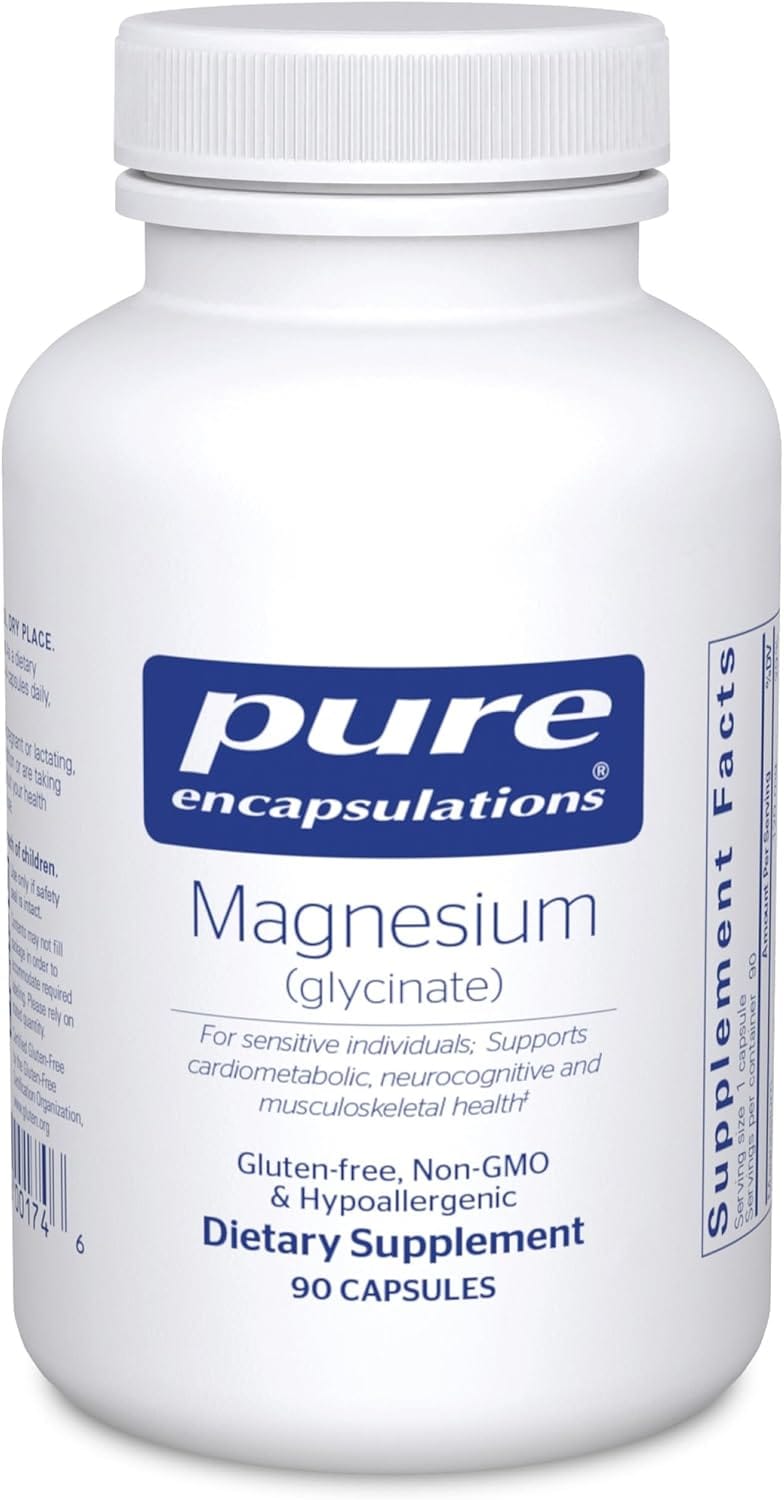
Magnesium glycinate is magnesium bound to the amino acid glycine.
It has become particularly popular in the wellness and sleep space.
One reason is tolerability.
Mayo Clinic notes that magnesium glycinate is easier to tolerate for people who experience diarrhea with other magnesium supplements.
And if you're taking magnesium as part of your evening routine, tolerability matters.
You don't necessarily want a supplement that causes gastrointestinal problems right when you're trying to sleep.
Magnesium glycinate has also become popular among health educators such as Dr. Eric Berg, who frequently discusses this form in the context of magnesium supplementation, relaxation, and sleep.
Does Magnesium Glycinate Help With Sleep?
Magnesium is frequently promoted for sleep.
There are plausible biological reasons researchers are interested in the relationship between magnesium and sleep.
But that doesn't mean we can call magnesium glycinate a proven treatment for insomnia.
A 2024 systematic review examining magnesium supplementation and self-reported anxiety and sleep found potential benefits in some studies.
So, if you're looking for a well-tolerated supplement to include in your nighttime routine, magnesium glycinate is a good option.
Magnesium Glycinate for Menopause Anxiety
Hormonal changes coincide with changes in mood, anxiety, and sleep.
And once sleep becomes disrupted, anxiety becomes harder to manage.
You can end up in a cycle:
Anxiety → difficulty sleeping → exhaustion → more anxiety → another difficult night.
Magnesium is involved in normal nervous-system function, which is one reason researchers continue to investigate its potential relationship with anxiety.
So, Why Is Magnesium Glycinate So Popular for Sleep?
There are several reasons.
First, it is a well-tolerated form of magnesium.
Second, it is associated with glycine, an amino acid with its own biological role.
Third, the combination has become extremely popular in the wellness industry for evening relaxation.
And fourth, women searching for help with menopause sleep problems are often specifically looking for a magnesium product they can take at night.
That makes glycinate a better option.
What it is
Magnesium bound to glycine
Magnesium combined with oxygen
Elemental magnesium
Lower percentage than oxide
Relatively high percentage
Bioavailability
Better tolerated
Lower bioavailability than several other forms
GI effects
Gentler
More likely to have a laxative effect
Common use
Nighttime use. Use to promote relaxation and lower anxiety
General supplementation, constipation
Sleep
Promote better sleep
Not specifically established as a sleep supplement
Anxiety
Lower anxiety by promoting relaxation
Not established for anxiety
Cost
Often more expensive
Usually inexpensive
Which Magnesium Should You Buy? Glycinate or Oxide
Choose magnesium glycinate if:
You're primarily interested in a nighttime magnesium supplement
You want a form that is generally well tolerated
You're interested in magnesium as part of your relaxation or sleep routine
You don't specifically want a laxative effect
Consider magnesium oxide if:
You're looking for a less expensive magnesium supplement
You want a relatively high amount of elemental magnesium
Constipation is also an issue you're trying to address
And there's nothing wrong with choosing oxide simply because it's affordable.
The "best" supplement is also one you're actually able and willing to take consistently.
Two Magnesium Options to Consider
If you're ready to compare actual products, I'd look at the Supplement Facts label first, then consider the form, dose, additional ingredients, quality controls, and price.
Magnesium Glycinate
Best fit: Someone specifically looking for a well-tolerated magnesium supplement for their evening routine.
[Pure Encapsulations Magnesium (Glycinate)]
What I'd check: elemental magnesium per serving, number of capsules, additional ingredients, and whether the manufacturer provides quality and testing information.
Magnesium Oxide
Best fit: Someone looking for an affordable magnesium supplement or who may also benefit from its laxative effect.
[PureGen Labs Magnesium Oxide]
What I'd check: elemental magnesium per serving and whether the product's dose is appropriate for your needs.
My Bottom Line
After comparing the two, I don't think the question is:
"Is magnesium glycinate good and magnesium oxide bad?"
That's too simplistic.
The better question is:
"What am I taking magnesium for?"
If constipation is part of the problem, magnesium oxide makes sense.
If you're looking for an inexpensive magnesium supplement, oxide has an advantage.
But if you're a woman in midlife looking for a well-tolerated magnesium supplement for your nighttime routine, magnesium glycinate is the form I'd investigate first.
Because its formulation and tolerability are better for that particular use.
And that's an important distinction.
Magnesium oxide isn't bad.
Magnesium glycinate isn't magic.
And the right form depends on your goal.
If you're experiencing persistent insomnia or significant anxiety during perimenopause or menopause, don't assume magnesium is the entire answer.
Sleep problems have multiple causes, and persistent symptoms deserve evaluation.
This article may contain affiliate links. If you buy through these links, I may earn a commission at no additional cost to you, helping support this website and its free content.
Medical Disclaimer: This article is for informational purposes only and does not constitute medical advice. Always consult a qualified healthcare provider before making changes to your health regimen or beginning any supplement or medication.
© 2026 · Midlife & Thriving · All rights reserved
COMPARTE


Suscríbete ahora.
Regístrate a nuestra newseletter para recibir las historias más interesantes del día directo en tu correo electrónico antes que cualquier persona
Creado con ©systeme.io• Política de Privacidad • Términos del servicio