
I Took Berberine for 30 Days: My 4-Pound Weight Loss Results
Subscribe to my email list
Get simple, research-backed tips for better sleep, balanced energy, and relief from menopause symptoms—delivered straight to your inbox.
I started taking berberine to support healthy blood sugar—not specifically to lose weight.
After 30 days, I went from 130 pounds to 126 pounds, a 4-pound difference. But the number on the scale wasn't the only thing I noticed.
My experience also made me curious about berberine's potential effects on appetite, cravings, energy, and other symptoms.
If you've been hearing about berberine as "nature's Ozempic" or as a natural weight-loss supplement, there's a lot of information—and a lot of hype—online.
So instead of simply repeating what I found on the internet, I wanted to share what actually happened during my own 30-day experiment.
Important: This is my personal experience, not medical advice, and my results should not be interpreted as a guarantee that berberine will produce the same results for someone else.
I’m 51, going through perimenopause, and like many women in midlife, I’ve noticed that my body doesn't respond to food, exercise, and stress the way it used to.
For years, I could make a few changes to my routine and see a difference.
Then perimenopause happened.
The weight started creeping up. My cravings changed. My energy wasn't always what it used to be, and suddenly losing a few pounds felt much harder than it had in the past.
That's when I started hearing more and more about berberine.
You may have seen it called a “natural alternative” to certain medications for blood sugar or even “nature's Ozempic” online. I'm not comfortable making claims like that because the science doesn't support treating berberine as a replacement for prescription medication.
But I was curious.
So I decided to try berberine myself and pay attention to what happened.
This is my personal experience—not a promise that you'll have the same results.
Why I Decided to Try Berberine
One of the hardest parts of getting older hasn't been simply seeing a higher number on the scale.
It's feeling like the rules changed.
I’m eating more protein. I'm walking regularly. I've added strength training and yoga to my routine. I'm trying to be more intentional about sleep and stress.
And yet, managing my weight during perimenopause has still been frustrating.
That's what made berberine interesting to me.
Berberine is a natural compound, an alkaloid found in several plants, including barberry, goldenseal, and Oregon grape. Plants containing berberine have a long history of use in Ayurvedic and traditional Chinese medicine.
Researchers are studying berberine for its potential effects on glucose metabolism, insulin resistance, cholesterol, and other metabolic markers.
Weight loss is another area of interest.
But here's something I think is important to say before going any further:
Berberine isn't a magic weight-loss pill.
According to the National Center for Complementary and Integrative Health, berberine affects body weight and BMI, but the evidence isn't conclusive.
Research has also used different formulations and doses, making it difficult to know exactly how much benefit a particular supplement will provide.
That actually made me more interested in trying it.
I didn't want a miracle.
I wanted to see what would happen in my own real life.
The Berberine I Chose
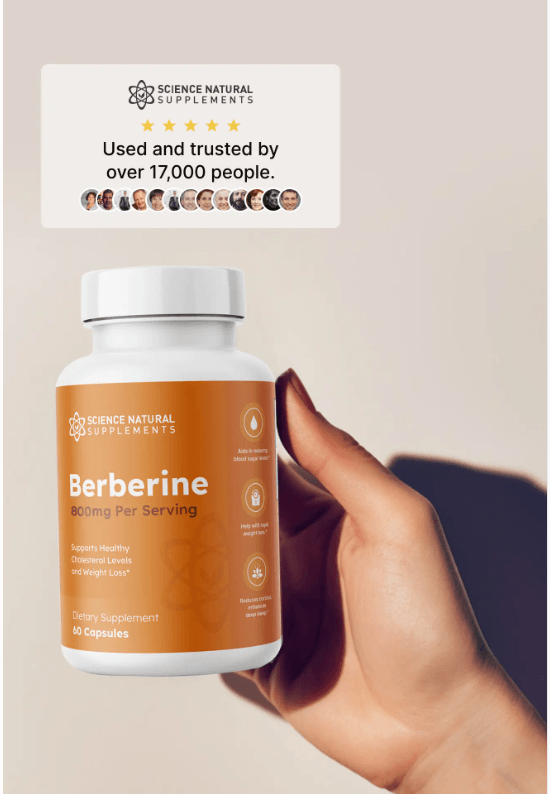
The berberine I'm taking is from Science Natural Supplements.
The instructions for the supplement I’m using are simple:
Take 2 capsules daily with a meal.
I decided to take my two capsules with lunch.
There isn't strong evidence that there is a specific hour of the day when everyone should take berberine. For my routine, lunch was simply the easiest meal to associate with my daily supplement.
The most important thing for me was consistency.
I didn't want to take it randomly one day in the morning, another day at night, and then forget it for two days.
So my routine became:
Lunch → meal → 2 berberine capsules.
What I Wanted to Find Out
I wasn't expecting to wake up after a few days with a completely different body.
Instead, I wanted to pay attention to a few things.
Would I notice a difference in my cravings?
One of the things I pay attention to now is how hungry I actually am versus how much I want something sweet or snacky.
Would I notice a difference after meals?
Because berberine is being studied for its effects on glucose metabolism, I was particularly interested in how I felt throughout the day.
Research suggests berberine has beneficial effects on blood glucose and insulin resistance, although the evidence has limitations and isn't strong enough to consider it a treatment replacement.
Would my weight change?
Obviously, this was one of the questions I was most curious about.
But I also knew better than to judge a supplement based on a few days on the scale.
Weight naturally fluctuates, and midlife weight management involves much more than one supplement.
Would I experience side effects?
This was important to me too.
Natural doesn't automatically mean risk-free.
What I Learned During My Experiment

The biggest thing I've learned from trying supplements during midlife is that I don't want to depend on one product to solve everything.
Berberine is one small part of what I'm doing.
I'm still paying attention to protein.
I'm still walking.
I'm still doing strength training.
I'm still trying to improve my sleep.
And I'm still working on managing stress.
That's important because it would be impossible for me to say that any change I notice comes entirely from one capsule or supplement.
In fact, that's one reason I like the idea of documenting the experience honestly.
I'm not looking for a miracle.
I'm looking for tools that might make taking care of myself a little easier.
Why I Started Taking Berberine
Weight loss wasn't my main reason for trying berberine.
I was more interested in its potential effects on blood sugar and insulin sensitivity.
As I've gotten older, I've become much more conscious of metabolic health, especially because weight seems harder to manage in midlife.
I wanted to see what would happen if I added berberine to my routine.
And that's where the experiment became interesting.
Because although I was paying attention to my weight, I wasn't expecting a dramatic change.
Is Berberine Actually Good for Weight Loss?
This is where I think it's important to separate internet hype from actual research.
Berberine influences metabolic markers, including blood glucose, insulin resistance, and effects on weight-related measures.
A 2025 meta-analysis of 23 studies reported reductions in body weight, BMI, and waist circumference among people taking berberine.
That sounds promising.
But promising isn't the same as proven.
And I think that's especially important when you're looking at supplements promoted heavily on social media.
I wouldn't take berberine expecting it to produce dramatic weight loss.
I'd think of it as one possible tool in a much bigger picture of metabolic and lifestyle health.
My 30-Day Berberine Results
I started at:
130 pounds
After 30 days:
126 pounds
Total change: 4 pounds
That's a difference of approximately 3.1% of my starting body weight.
I was surprised.
Four pounds may not sound like a huge number, but when you're already around 130 pounds, losing four pounds represents a noticeable change.
And, more importantly, I wasn't taking berberine specifically as a weight-loss product.
My goal was primarily to support my blood sugar.
So naturally, I started wondering:
Could berberine have played a role in my weight loss?
The honest answer is: I don't know.
Weight can change for many reasons, including food intake, activity, water retention, hormones, stress, sleep, and changes in appetite.
I can't prove that berberine alone caused my 4-pound loss.
But my experience is interesting enough that I wanted to investigate what the research actually says.
What I Noticed During My Experiment
The number on the scale was only one part of my experience.
Other people taking berberine have reported changes that caught my attention as well.
For example, one person whose experience I found while researching berberine said they originally started taking it to support blood sugar and prevent prediabetes from getting worse.
They reported experiencing:
Less constant thirst
Less hunger, particularly at night
Better portion control
Less acid reflux
More energy
A less puffy face in the morning
Smoother-looking skin
Less dry skin
No PMS acne
Fewer tension headaches and migraines
They also said they were taking inositol and felt that adding berberine was when they noticed the effects becoming stronger.
These kinds of personal reports are part of what made me want to understand the supplement better.
The Appetite Connection Is Especially Interesting
One thing that stood out to me from the experiences I reviewed was appetite.
I feel less hungry while taking berberine. I previously had constant hunger—including at night; it had been present for so long that I had assumed it was normal.
After taking berberine, I noticed the absence of that constant thirst and hunger.
That doesn't prove berberine suppresses appetite for everyone.
But appetite is relevant when we're talking about perimenopause weight.
I was naturally eating less because I was experiencing fewer hunger pangs, which could indirectly affect my calorie intake.
What About Blood Sugar?
This was actually the reason I started taking berberine.
Research on berberine and blood sugar is more established than the research on weight loss.
NCCIH reports that a 2021 review of 46 studies involving more than 4,000 participants found evidence that berberine may improve blood glucose levels, insulin resistance, and lipid metabolism in people with type 2 diabetes.
However, NCCIH also claims that many of the studies had limitations, including differences in study quality and populations.
That's why I think it's more accurate to think of berberine as a potential metabolic-health supplement, rather than a weight-loss supplement.
What About Side Effects?
This is another part of my research that I think is important to talk about.
"Natural" doesn't automatically mean "risk-free."
NCCIH reports that some people experience gastrointestinal side effects from berberine, including:
Nausea
Diarrhea
Constipation
Bloating
Abdominal discomfort
Berberine can also interact with medications.
And the personal experiences I found online weren't universally positive.
Some people reported feeling great while taking it, while others described significant stomach problems or other unpleasant effects.
That's a good reminder that supplements affect people differently.
If you're taking prescription or over-the-counter medication, it's important to discuss berberine with your doctor or pharmacist before adding it to your routine.
Berberine should also not be used during pregnancy or breastfeeding, and it should not be given to infants.
The Berberine Deal I'm Using
One reason I decided to share the specific product I'm taking is that I know how confusing the supplement market is.
The bottle contains 60 capsules, with a recommended serving of 2 capsules per day.
That means one bottle provides 30 servings.
Currently, the offer is 2 bottles for $49.
That gives you:
120 capsules total
60 days of use
Approximately 2 months of supply
About $24.50 per month
Roughly $0.82 per day
Of course, supplement promotions can change, so check the current offer and product details before purchasing.
For more information, enter here
Remember, at the time of writing, they are offering a 2x1 offer
My 30-Day Berberine Experiment: The Bottom Line
So, what happened?
I started at:
130 pounds
After 30 days:
126 pounds
Total difference: 4 pounds.
Was berberine responsible for all four pounds?
I can't honestly say that.
But the result surprised me enough to make me want to learn more about this supplement.
The research suggests berberine may have modest effects on body weight and may also influence blood glucose and insulin-related metabolic measures.
But the evidence doesn't justify treating berberine like a miracle weight-loss drug.
For me, the most interesting part of this experiment was that weight loss wasn't even my primary goal.
I started taking berberine because I was interested in supporting my blood sugar.
Then I stepped on the scale 30 days later and realized I had gone from 130 to 126 pounds.
And that's why I'm continuing to pay attention to what happens next.
Have You Tried Berberine?
If you've tried berberine, I'd love to hear about your experience.
Did you notice changes in:
Your appetite?
Cravings?
Energy?
Weight?
Blood sugar?
Digestion?
Or did you notice absolutely nothing?
Everyone's experience is different, and personal experiences shouldn't replace medical evidence—but they certainly raise interesting questions.
My experiment started with one goal and ended with a result I wasn't expecting.
Now I'm curious to see what happens next.
This article may contain affiliate links. If you buy through these links, I may earn a commission at no additional cost to you, helping support this website and its free content.
Medical Disclaimer: This article is for informational purposes only and does not constitute medical advice. Always consult a qualified healthcare provider before making changes to your health regimen or beginning any supplement or medication.
© 2026 · Midlife & Thriving · All rights reserved
COMPARTE


Suscríbete ahora.
Regístrate a nuestra newseletter para recibir las historias más interesantes del día directo en tu correo electrónico antes que cualquier persona
Creado con ©systeme.io• Política de Privacidad • Términos del servicio